Talks, Podcasts, Articles, and other Publications
Over time, I’ve contributed to a number of publicly available resources that mix my ideas with those of others. Please reach out if you have a podcast, round table, or conference where I might be able to contribute.
Speaking & Writing in 2024
CTO Craft Con Berlin – Facilitation: A Superpower for Engineering Leaders
It's been a while since I've spoken at a conference - so I was delighted that my talk at the inaugural CTO Craft Con Berlin went down so well. And the talk allowed me to raise my game with storytelling and interactive presentation formats.

DigiTech – S1 EP4 Lightning Talks With Technical Leaders
I've worked with Paul on several roles. He and his company are ace at finding top talent. So I was happy to join him on his podcast to talk about my career journey and approach to hiring.
Speaking & Writing in 2023
Talent.io CTO Afterwork – Shaping Engineering Organisations and Cross-functional teams
Jérémy Duval and the Talent.io team kindly invited me to their CTO Afterwork event. We discussed cross-functional teams with smart leaders like Sophie Davies-Patrick, Alex Fedorov, Oleksii Ishchenko, Ellen König, and Tiffany Conroy.
Engineer to Manager – About leadership and remote work culture
I have the utmost respect for Oleks, who’s working in Kyiv while still sharing his knowledge on how to become a good engineering manager.
Better Tech Leadership – Engineering Success
I met Matt at a cafe in Berlin for the podcast recording. Over a latte, I came to appreciate Matt’s curiosity. Yes, his Better Tech Leadership podcast is marketing. But I could tell he had a genuine interest in engaging with his guests to grow as a leader himself.
Lets Talk Leadership: The Culture edit
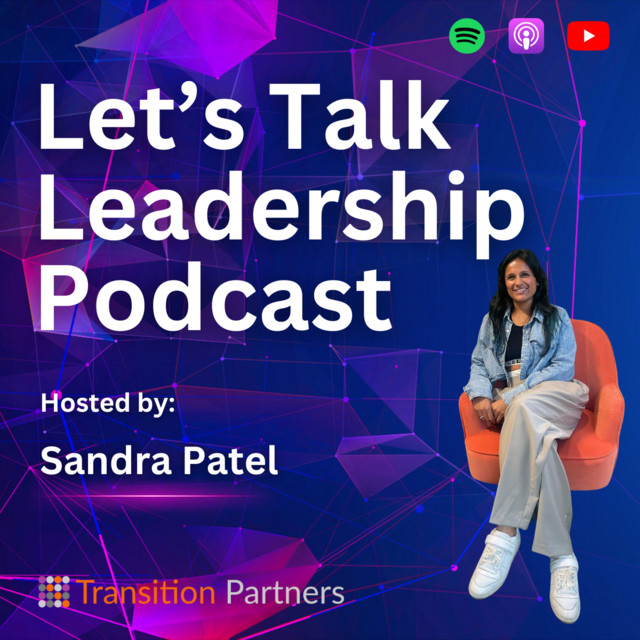
Hosted by Transition Partners, in each episode, Sandra is joined by some of Europe’s greatest technology leaders.
Leaders in Tech – Retaining Talent @ Austin Fraser
I worked with Katarina and Austin Fraser on the hard-to-fill positions for our ERP systems development. They also organize regular networking events in their fab office near Berlin Zoological Garden. This time, I’m part of a round table discussion on retaining talent.
Speaking & Writing in 2022
CTO Craft Bytes: Your hiring process is your best employer branding tool
In addition to their Slack group, the CTO Craft community also hosts regular lunch events. I had the pleasure to present my views on the best hiring processes that also improve your reputation in the job market.
School of Hiring - How To Become Better At Hiring with Claus Höfele
Konstanty is a respected teacher of great hiring practices and the host of School of Hiring. We talk about how you as a engineering leader can help improve your company’s hiring practices.
Achieve your goals with Tiny Habits and WOOP
Boris, Marcus, and I are all trained as Tiny Habits coaches (a pragmatic approach to establish good habits). In this collaboration, we explore how you might combine this method with WOOP (a goal setting method developed by Gabriele Oettingen).
Agile Review - Special Guest: Claus Höfele
I was really amazed when Ennis sent me a conch shell after the recording. Agile teams will sometimes choose a symbolic conch shell, which is passed around as a sign who is entitled to speak without interruption. (It’s also a reference to the book Lord of the Flies.) What a wonderful souvenir.
Inspired e011 - Trust, Responsibility, Behavior Change, and Positive Psychology with Claus Höfele
Balach and I go back a long time and met while working for HERE Technologies. He’s an all-around product genius and also develops the SaaS planning tool epek. In his podcast, we talk about high performing teams, and how leaders can use Emotional Intelligence and Positive Psychology to create a better workplace for themselves and their teams.
Evo #69 - So viel positive Psychologie steckt im Leadership
🇩🇪 Mit Maxie hatte ich die Freude über Positive Psychologie im Zusammenhang mit Führung zu sprechen.
Speaking & Writing until 2021
Server-Side Swift (iOSDevUK 7)
Aberystwyth (Wales) is well worth a visit just for the seafront location. Lucky for me, I also joined this iOS-focused conference (the longest running iOS conference in the world) for its 7th incarnation to talk about using Swift for server-side development.
Practical WatchKit Development (UIKonf 2015)
My biggest presentation gig to date at the lovely UIKonf. I gave a no-nonsense talk about WatchKit development. At the time, I worked for eBay Kleinanzeigen where we developed one of the earliest WatchKit apps to send messages among customers.
Ok Festival 2014: Usability Testing Workshop
As an engineer, I found usability testing incredibly useful to figure out how to improve the apps I helped to develop. In this workshop, Lydia and I shared our process (based on Steve Krug’s wonderful books).

Macoun 2013: MapKit Clustering Techniken
🇩🇪 Meine CCHMapClusterController Bibliothek ist mein erfolgreichstes Open-Source-Projekt. Es hat mir auch in meiner eigenen Stolpersteine App gute Dienste geleistet um mehrere tausend Symbole auf einer Karte anzuzeigen. In diesem Vortrag gehe ich auf die Details des Clustering Algorithmus ein.
Patents
During my time at Sony Ericsson in Germany and Japan, I invented two patents for mobile systems and UI software (JP2007280175, EP1452965).
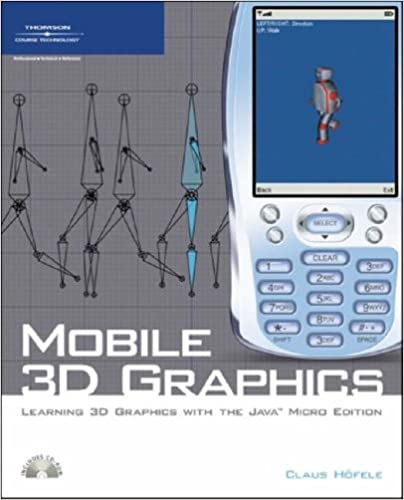
Mobile 3D Graphics and other books
In addition to authoring Mobile 3D Graphics (Cengage Learning PTR), I also co-authored More iPhone Cool Projects (Apress) and Game Programming Gems 8 (Cengage Learning PTR). Those were the times when I focused my work on devices with limited processing power such as mobile phones and game consoles.